A Beginner's Diving Gear Guide | What to Buy vs. What's Fine to Rent
Trying to buy every piece of diving gear yourself can run into the hundreds of thousands of yen, and that's often enough to make people hesitate on that first step. In reality, you don't need to buy everything up front. The key is separating personal gear worth getting early from items that are fine to rent.
In short, get personal gear for your face and feet early, and start with rentals for expensive gear that needs fitting — that order leads to the fewest regrets.
Do I Need to Buy All My Diving Gear Right Away?
Most dive shops offer a full rental service aimed at beginners. Expensive, bulky gear in particular — like a BCD (buoyancy control device), regulator, or tank — is realistically fine to rent while you're still figuring out how often you'll dive and where. Rather than forcing yourself to buy everything, getting comfortable diving first and gradually picking up what you need leads to fewer regrets.
How Do I Tell What to Buy from What's Fine to Rent?
| Gear | Buy / Rent | Reason |
|---|---|---|
| Mask | Buy early | How well it fits your face directly affects leaking and your field of view |
| Fins | Buy early | The wrong size tires your legs quickly and makes swimming harder |
| Gloves / boots | Buy early | Important for both injury prevention and hygiene — owning your own gives peace of mind |
| BCD (buoyancy control device) | Renting is fine | Needs fitting to your build, and pricey |
| Regulator | Renting is fine | A precision instrument that needs maintenance |
| Tank | Rent (required) | Consumable-style gear you're expected to source on-site |
| Wet / drysuit | Buy once your destination is decided | The right type and thickness depends on the water temperature where you'll dive |
What Personal Gear Is Worth Buying Early?
Gear that fits directly against your face or feet is heavily dependent on individual fit, and owning your own also has real hygiene benefits.
- Mask: how well it matches your face shape directly affects leaking and your field of view. Rentals often don't fit your face well
- Fins: the wrong size tires your legs quickly and makes swimming harder
- Gloves / boots: important both for preventing injuries from coral or rocks and for warmth. Owning your own also gives peace of mind hygiene-wise
- Snorkel: inexpensive, and easy to carry alongside your mask as a set
What's the Difference Between a Wetsuit and a Drysuit?
Which suit to choose changes a lot based on the water temperature where you'll dive. I personally dove in a wetsuit in Okinawa's Kerama Islands, but wore a drysuit when getting my Advanced certification in Shakotan, Hokkaido. A wetsuit keeps you warm by trapping a thin layer of water inside the fabric, while a drysuit is built so your body never touches the water at all — the warmth they provide is completely different. Even though they're both called "suits," the way you put them on and take them off, how you achieve neutral buoyancy, and even how your body feels moving are different enough to call them a different category of gear entirely, so it's worth taking a course (drysuit specialty) before diving in one for the first time.
What Small Extras Are Handy to Have?
- Dive computer: shows depth, water temperature, and remaining no-decompression time in real time. A key piece of safety gear — the more dives you log, the bigger the benefit of owning your own
- Logbook: records how many dives you've made, at what depth and temperature. Also used as proof when applying for higher certifications, so it's worth keeping from early on
- Waterproof case / dry bag: keeps your phone or valuables dry on the boat
Where Do Beginners Commonly Go Wrong When Buying?
A mask chosen purely for cheapness that doesn't fit your face and keeps letting in water, or fins in the wrong size that give you cramps — a lot of beginner mistakes like these come down to "buying everything online without trying it on or getting fitted." If you can, trying out a variety of gear through rentals for your first several dives, then buying once you have a feel for the brand and size that suits your body, is a roundabout-looking but genuinely reliable approach.
Summary
With diving gear, the basic policy — get personal gear for your face and feet early, and start with rentals for expensive gear that needs fitting — lets you get started without forcing anything. Whether you need a wetsuit or drysuit also depends on where you'll dive, so buying once your destination is decided leads to the fewest regrets.
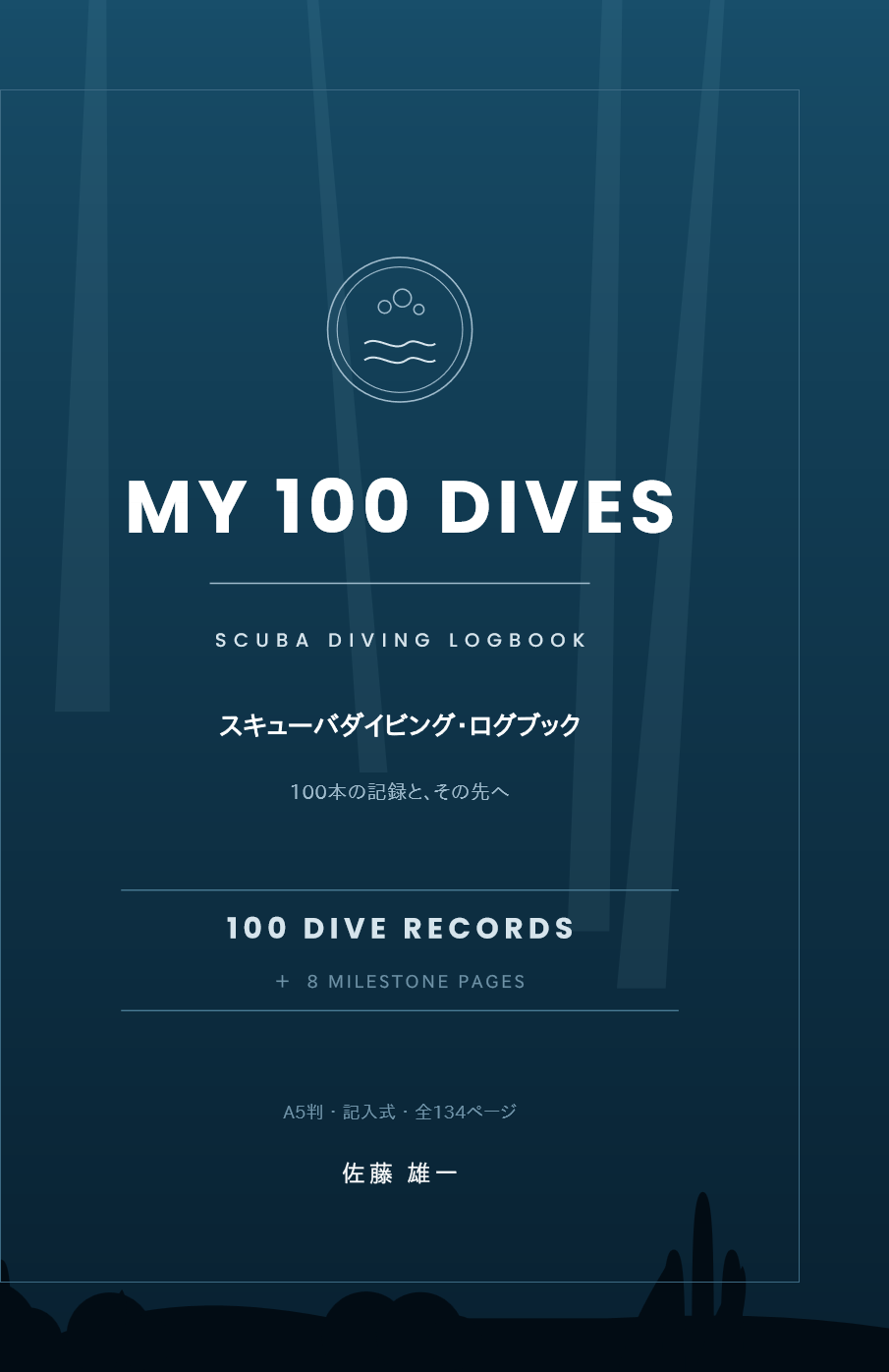
MY 100 DIVES: Scuba Diving Logbook
A fill-in logbook covering every field needed to document your dive count — depth, water temperature, remaining pressure, visibility, and more. Includes 100 dive-record pages, milestone pages, a gear checklist, and a bilingual (Japanese/English) marine life checklist. (Japanese-language book.)
📖 Read on Kindle for ¥1,628Frequently Asked Questions
Q. What should I buy first when starting diving?
A. It's a good idea to start with personal gear that fits directly against your face and feet, like a mask, fins, gloves, and boots. Pricier gear like a BCD or regulator is fine to wait on until you know how often you'll be diving.
Q. Should I buy a wetsuit or a drysuit?
A. It depends on the water temperature where you'll be diving. A wetsuit if you mainly dive somewhere warm like Okinawa, a drysuit if you're headed somewhere cold like Hokkaido. Buying once your destination is settled is the order least likely to lead to regret.
Q. Do beginners need a dive computer too?
A. Renting one from the shop is fine at first, but the more dives you log, the bigger the benefit of owning one yourself, so you can constantly check depth, water temperature, and no-decompression limit.
Q. Is rented gear hygienic?
A. Most shops clean and disinfect their gear, but if it concerns you, owning just the items that touch your skin directly, like a mask or boots, gives peace of mind.
Q. How much does a full set of gear cost in total?
A. Buying everything brand new can run into the hundreds of thousands of yen, but you don't need to get it all at once. Buying personal gear first and adding pieces gradually is the realistic approach.